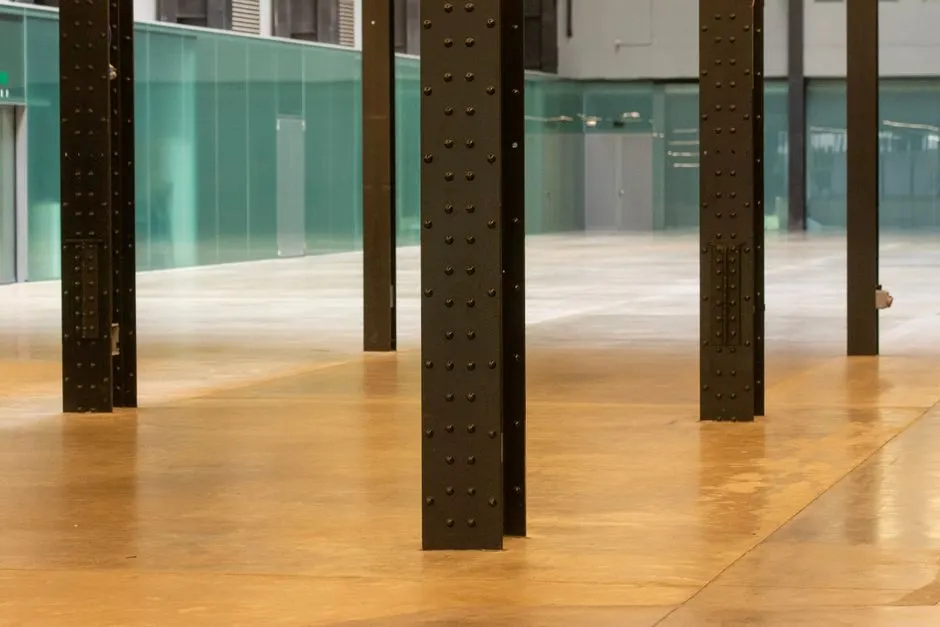
For most Richmond commercial spaces, epoxy wins on chemical resistance, colour options and slip control, while polished concrete wins on upfront cost and zero coating to peel. If your floor takes forklift traffic, food spills or grease, epoxy is the better long-term buy; if you need a bare, low-maintenance slab in a dry warehouse and want to spend the least today, polished concrete is the practical pick.
We install both systems across Richmond, and the right answer depends on what your building actually does all day. Below we break down cost, lifespan, moisture behaviour in the Lower Mainland climate, and downtime so you can decide with real numbers instead of sales talk.
The short answer for Richmond commercial floors
Epoxy flooring in Richmond is a resin coating system that bonds to a prepared concrete slab to create a seamless, chemical-resistant, easy-to-clean surface for commercial and industrial spaces. Polished concrete is the slab itself, ground down with progressively finer diamond tooling until the aggregate shows and the surface takes a shine - no coating added.
That single difference drives everything else. A coating can be repaired, recoloured and refreshed. A polished slab can only be re-ground, and whatever stain or crack is in the concrete stays in the concrete.
Here is the quick version for a Richmond business owner comparing the two:
- Choose epoxy if you need chemical resistance, colour and branding, anti-slip texture, or a floor that hides patched slabs.
- Choose polished concrete if you want the lowest installed cost, no coating to maintain, and a dry, dust-controlled environment.
- Choose neither on its own if your slab has moisture issues, heavy oil exposure, or large structural cracks - both need prep first.
Most Richmond warehouses, restaurants and retail units we walk through end up with some form of Commercial Epoxy Flooring in Richmond, British Columbia (BC) because the slab underneath is rarely good enough to polish as-is.
How each floor is actually built
Neither floor is a one-day paint job, and the prep stage decides whether either system lasts. On a typical Richmond commercial job, we spend more time on the slab than on the finish.
Epoxy build-up
- Diamond grind or shot-blast the slab to open the concrete profile.
- Repair cracks, spalls and control joints.
- Apply a primer or moisture-barrier coat if the slab reads high on a calcium chloride test.
- Roll or squeegee the base epoxy coat, broadcast flake or quartz if specified, then seal with a topcoat.
A standard commercial epoxy system lands between 250 and 500 microns dry film thickness. A heavy-duty system for forklift traffic runs 500 to 1,000 microns.
Polished concrete build-up
- Grind the slab with metal-bond diamonds to remove the top layer and expose aggregate.
- Harden the surface with a chemical densifier.
- Polish through resin-bond diamond grits, typically 400 to 1,500 grit for a commercial sheen.
- Apply a stain guard if the client wants extra protection.
Polished concrete is only as good as the slab it comes from. If your Richmond building was poured in the 1970s or 1980s, expect inconsistent aggregate, old patch marks and hairline cracks that show through the polish.
Both systems start with the same step - proper Concrete Floor Preparation in Richmond, British Columbia (BC). Skip it and neither floor will hold up past the first year.
Cost comparison: what you pay in 2026
Typical 2026 pricing in Metro Vancouver puts commercial epoxy between $4 and $9 per square foot installed, and polished concrete between $3 and $7 per square foot. The gap narrows fast once you add densifiers, stain guards or decorative aggregate to the polish.
What actually moves the number:
- Slab condition. Cracked, spalled or contaminated concrete adds $1 to $3 per square foot in prep.
- System thickness. A 250-micron coating and a 1,000-micron trowel-applied system are not the same product at the same price.
- Moisture mitigation. A moisture-barrier primer adds roughly $1 to $2 per square foot but prevents the blistering that kills epoxy on older slabs.
- Access and hours. Night and weekend work in an occupied building adds labour.
For a 5,000 sq ft Richmond warehouse, that means roughly $20,000 to $45,000 for epoxy and $15,000 to $35,000 for polished concrete, before prep surprises. On a 1,200 sq ft restaurant floor, expect $5,000 to $11,000 for a food-grade epoxy system.
Polished concrete looks cheaper on the quote. It stops looking cheaper when you factor in the densifier, the stain guard, and the fact that you cannot patch a stain out of a polished slab later.
Durability and lifespan under real Richmond traffic
A properly installed commercial epoxy floor in Richmond lasts 10 to 20 years before it needs a recoat, while polished concrete lasts 20 years or more with periodic re-polishing. The catch is what "lasts" means in each case.
Epoxy wears as a coating. It can scuff, chip at the edges of a dropped pallet, and wear thin in the traffic lanes. The good news is that a worn epoxy floor is a repair job, not a replacement job - we grind the worn area, re-coat it, and blend it in.
Polished concrete wears as a surface. It does not peel, but it does scratch, and it stains. Forklift tyres leave black marks. Oil and red wine soak into the pores if the slab was not properly densified. Once a stain is in the concrete, you live with it or you grind the whole floor down again.
For Richmond operations running forklifts, pallet jacks or heavy foot traffic, epoxy holds up better because it is sacrificial - you lose the coating, not the slab.
If your floor is already coated and wearing through, we handle that as Epoxy Floor Resurfacing in Richmond, British Columbia (BC) rather than a full tear-out, which usually saves 40 to 60 percent versus starting over.
Slip resistance, moisture and Richmond's climate
Richmond sits on the Fraser delta, and that matters for floors. The water table is high, winter brings months of rain, and many commercial slabs sit close to grade. Moisture vapour moving up through concrete is the single biggest reason epoxy coatings fail in this city.
We test every slab before we quote. A calcium chloride test or in-situ relative humidity probe tells us the moisture vapour emission rate. Anything above 3 lbs per 1,000 sq ft per 24 hours needs a moisture-barrier primer or a different system altogether.
Polished concrete has an advantage here - it does not trap moisture under a coating, so it does not blister. But it also does not stop moisture, and a damp slab stays damp.
Slip resistance is where epoxy pulls ahead for most Richmond businesses:
- Epoxy can be specified with aluminium oxide or silica aggregate for a wet-rated anti-slip finish.
- Polished concrete is naturally slick when wet unless you stop at a lower grit, which dulls the finish.
- Restaurants, breweries and food processing floors in Richmond almost always need the textured epoxy option.
For kitchens, walk-in coolers and any floor that sees standing water, we spec Anti-Slip Epoxy Flooring in Richmond, British Columbia (BC) with a wet coefficient of friction above 0.60, which meets the slip-resistance guidance most insurers and WorkSafeBC inspectors look for.
Downtime: how long your business is closed
Epoxy typically takes 3 to 5 days of cure before you can put it back into service, while polished concrete can take 5 to 10 days because of the multi-stage grinding. Neither is a weekend project on a large floor.
Here is the realistic timeline for a 2,000 sq ft commercial space:
- Day 1: grind, crack repair, moisture testing.
- Day 2: primer and base coat (epoxy) or densifier and first polish pass (concrete).
- Day 3: broadcast and topcoat (epoxy) or continued polishing (concrete).
- Day 4-5: cure. Foot traffic after 24 hours, full traffic after 72 hours.
Fast-cure options change the math. Polyaspartic topcoats let you walk on the floor in 4 to 6 hours and drive on it the next day. For a Richmond restaurant that cannot afford to close for a week, that is usually worth the extra cost.
We schedule most commercial work overnight or over a weekend so the business opens Monday morning without a shutdown.
Which floor suits which Richmond business?
Match the floor to the work, not to the photo you saw online. Here is how we typically spec Richmond commercial spaces:
- Warehouse and distribution: heavy-duty epoxy, 500 to 1,000 microns, with line marking. Polished concrete works if the slab is dry and traffic is light.
- Restaurant and commercial kitchen: food-grade epoxy with anti-slip aggregate and coved edges. Polished concrete is a poor fit for grease and hot water.
- Retail and showroom: decorative epoxy or metallic finish for a branded look. Polished concrete suits a minimalist aesthetic.
- Auto shop and workshop: chemical-resistant epoxy with a flake or quartz broadcast for grip and stain hiding.
- Office and light commercial: either works. Polished concrete is often the cheaper choice.
If your space is in the newer industrial parks around Bridgeport or along the No. 6 Road corridor, the slabs are usually in good enough shape to give you a real choice. Older buildings near Steveston and along Westminster Highway often need crack repair and moisture mitigation before either system goes down.
For food and beverage operations, we spec Food-Grade Epoxy Flooring in Richmond, British Columbia (BC) that meets CFIA requirements for washdown and sanitation.
Common mistakes we see on commercial floors
The failures we get called to fix in Richmond almost always trace back to one of five decisions made before the floor was installed.
- Skipping moisture testing. Coating a damp slab is the fastest way to get blisters and delamination within 12 months.
- Thin-spec systems on heavy traffic. A 200-micron coating will not survive a forklift lane. It will look great for six months and then wear through.
- No expansion joint plan. Joints move. If the coating bridges them rigidly, it cracks. We fill and honour joints properly.
- Polishing a slab that should have been coated. If the concrete is stained, patched or inconsistent, polishing just makes the flaws permanent and shiny.
- DIY kits from a big-box store. Consumer epoxy is 50 to 60 percent solids. Commercial systems are 100 percent solids. They are not the same product, and the failure rate on DIY commercial floors is high.
One more: choosing a floor based on a photo. A metallic epoxy showroom floor and a warehouse floor use the same resin chemistry but completely different build specs. Get the spec in writing before you sign.
When to call a professional
Call us when the floor is more than a cosmetic problem. If your current coating is peeling, if the slab has cracks wider than a credit card, if you have had a moisture issue, or if the space is going to run forklifts or food production, the DIY route costs more in the long run than doing it once properly.
We handle the full scope - moisture testing, crack repair, grinding, coating and cure scheduling - so you get one crew and one warranty instead of three trades pointing at each other. Our team works nights and weekends so your Richmond business does not lose a day of revenue.
If you are weighing options on a specific building, we will walk the slab with you and tell you honestly whether epoxy or polished concrete is the right call for that space.
Frequently Asked Questions
Is epoxy or polished concrete cheaper for a Richmond commercial floor?
Polished concrete is usually cheaper upfront - roughly $3 to $7 per square foot in 2026 versus $4 to $9 for epoxy. But once you add densifiers, stain guards and the cost of grinding out stains later, epoxy often costs less over a 15-year ownership period.
How long does a commercial epoxy floor last in Richmond?
A properly installed commercial epoxy floor lasts 10 to 20 years in Richmond before it needs a recoat. Lifespan depends on traffic, slab moisture and system thickness - a 500-micron system on a dry slab will outlast a thin coating on a damp one by years.
Can you polish concrete that already has epoxy on it?
No. The epoxy has to come off first, which means full coating removal and grinding before polishing can start. That usually makes polishing more expensive than simply recoating the existing floor with a new epoxy system.
Which floor is better for a Richmond restaurant kitchen?
Epoxy, without question. Commercial kitchens need chemical resistance, anti-slip texture and coved edges that seal to the wall. Polished concrete is too slick when wet and stains badly from grease and food dyes.
How long will my business be closed during installation?
Plan for 3 to 5 days for epoxy and 5 to 10 days for polished concrete on a typical commercial floor. Fast-cure polyaspartic topcoats cut that to 24 hours of downtime, which is why we recommend them for restaurants and retail.
Get help with Epoxy Flooring in Richmond
Whether you run a warehouse on Mitchell Island, a restaurant in Aberdeen Centre or a retail unit on Bridgeport Road, we can tell you in one site visit whether epoxy or polished concrete is the right floor for your space.
Call Richmond Elite Epoxy Flooring at +7742316666 to book a walkthrough and get a written spec with pricing for your square footage.