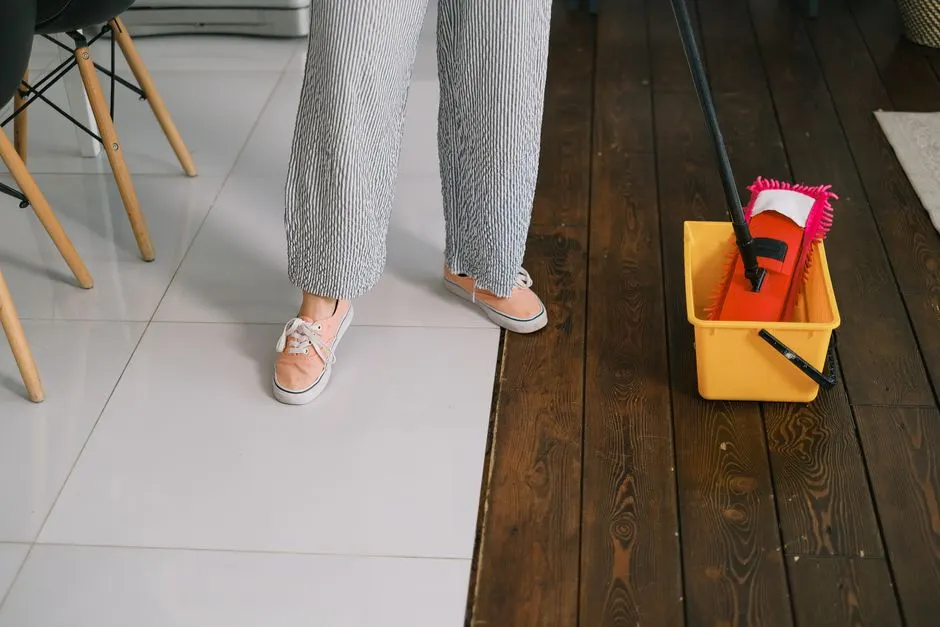
Epoxy floors in Richmond homes stay glossy and intact for 10 to 15 years when you sweep them every few days, mop with a pH-neutral cleaner diluted to about 1 ounce per gallon of water, and keep grit off the surface. That is the whole routine. Everything else - the specialty pads, the squeegees, the seasonal deep cleans - exists to support those three habits.
Epoxy Flooring in Richmond, British Columbia (BC) is a resin-based floor coating that bonds directly to prepared concrete and cures into a hard, seamless surface. It resists oil, road salt, and most household chemicals, which is why it shows up in garages, basements, and laundry rooms across Steveston, Terra Nova, and Broadmoor. What it does not resist is neglect - and in the Lower Mainland, neglect looks like a film of wet grit tracked in from a November driveway.
Below is the exact cleaning schedule we walk our own customers through, the products that work, the ones that ruin a finish, and how Richmond's climate changes the rules.
The short answer: what an epoxy floor actually needs
An epoxy floor needs three things: dry grit removed before it abrades the surface, a neutral-pH cleaner that lifts oils without etching the resin, and prompt attention to spills before they sit overnight. Skip any one of those and you shorten the coating's life by years.
The reason is mechanical. Epoxy is hard, but it is not scratch-proof. Sand, gravel, and de-icing salt crystals act like sandpaper underfoot. Every time someone walks across a gritty garage floor, those particles grind against the topcoat. Over a single Richmond winter, a two-car garage can see hundreds of those passes.
Chemical damage works the other way. Strong alkaline cleaners, citrus-based degreasers, and anything with ammonia slowly dull the gloss and leave a chalky haze. You will not notice it in week one. You will notice it after two years, when the floor looks flat instead of reflective.
How do you clean an epoxy floor without dulling the finish?
You clean an epoxy floor by sweeping or dust-mopping first, then mopping with warm water and a pH-neutral cleaner, then letting it air-dry or running a clean microfiber pad over it. Never mop a dry, gritty floor - you are just pushing abrasives around.
Here is the sequence we recommend, in order:
- Sweep or vacuum. A soft-bristle push broom or a shop vac with a hard-floor attachment. Two minutes for a standard double garage.
- Mix the cleaner. One ounce of pH-neutral floor cleaner per gallon of warm water. More is not better - residue attracts dirt.
- Mop in sections. A microfiber flat mop works better than a string mop because it does not leave standing water in the corners.
- Rinse if needed. For kitchen or laundry areas, a second pass with clean water prevents film buildup.
- Dry. Air-dry takes 10 to 15 minutes in a heated home. In an unheated Richmond garage in January, give it 30.
For heavier grease - think a workshop bay or a home gym corner - use a dedicated epoxy-safe degreaser and let it dwell for 3 to 5 minutes before wiping. Do not scrub hard with an abrasive pad. If you have to scrub, the cleaner is wrong, not the technique.
If your floor was finished with a Clear Epoxy Topcoat in Richmond, British Columbia (BC), the same routine applies, but you will see smudges more easily on a high-gloss surface. A dry microfiber pass after mopping handles that.
A weekly and monthly routine that takes 15 minutes
A weekly and monthly routine keeps a Richmond epoxy floor looking new for a decade or more, and the whole thing takes about 15 minutes a week plus one longer session a month.
Weekly (10-15 minutes)
- Sweep the full floor, including under the car and along the garage door threshold.
- Spot-clean any drips of oil, coolant, or bike chain lube with a neutral cleaner.
- Wipe the entry mat area - that is where 80 percent of tracked grit lands.
Monthly (30-45 minutes)
- Full mop with pH-neutral cleaner, section by section.
- Pull everything off the floor - bins, shelving feet, hockey bags - and clean underneath.
- Check the garage door seal and any floor drains for debris.
- Look for hairline scratches or dull patches near the vehicle parking spot.
Twice a year
- Deep clean with a soft-bristle deck brush on a pole.
- Inspect the coating at expansion joints and where the slab meets the wall.
- Reapply a sacrificial topcoat if the gloss has flattened noticeably.
If your floor is in a basement rather than a garage, the schedule is lighter. Basements see foot traffic, not tire traffic. A weekly sweep and a monthly mop is plenty. We install a lot of Basement Epoxy Flooring in Richmond, British Columbia (BC) in finished suites and rec rooms, and those floors typically need half the maintenance of a garage.
Richmond-specific problems: road salt, rain, and river fog
Richmond's climate creates three maintenance problems that homeowners in drier parts of BC never deal with: road salt tracked in from Highway 99 and No. 3 Road, near-constant winter moisture, and condensation from the fog that rolls off the Fraser.
Road salt. From November through March, vehicles bring in a fine white brine that dries into a sticky film. Left alone, it pulls moisture out of the air and keeps the floor damp. Rinse the garage floor with clean water once a week during salt season, then dry it.
Rain and tracked-in mud. Richmond gets roughly 1,100 mm of rain a year, most of it between October and March. Wet grit is worse than dry grit because it sticks. A good rubber-backed mat at the garage-to-house door and at the main entry cuts the amount of grit reaching your floor by more than half.
Condensation. Unheated Richmond garages sit close to the dew point for weeks at a time in winter. If you see beading water on the epoxy, run a small fan or a dehumidifier. Standing moisture on a coated slab is fine short-term, but it can wick into any unsealed edge or crack.
If you are dealing with a slab that has never been coated and you are tired of the damp-and-dust cycle, our team handles Concrete Sealing in Richmond, British Columbia (BC) as a first step before any coating goes down.
What should never touch an epoxy floor
Some products will visibly damage an epoxy floor within a single use, and most of them are already in your cleaning cupboard.
- Ammonia-based glass cleaners. They strip the gloss and leave streaks.
- Citrus degreasers (d-limonene). Great on grease, hard on resin. They soften the surface if left to dwell.
- Bleach straight from the jug. Diluted bleach is fine for a quick disinfect; undiluted bleach etches.
- Abrasive powders like Comet or Ajax. These scratch the topcoat permanently.
- Steam mops. The heat and moisture combination can lift edges at seams and around drains.
- Wire brushes and steel wool. Instant scratches.
- Solvents - acetone, lacquer thinner, paint thinner. They will dissolve the coating.
Brake fluid deserves its own warning. If you spill it in the garage, wipe it up within a few minutes. Brake fluid left on epoxy for an hour or more will leave a permanent soft spot.
Common mistakes we see in Richmond homes
The mistakes we see most often in Richmond homes are not dramatic - they are small habits that quietly cut a floor's lifespan in half.
- Mopping a dry, gritty floor. This is the single biggest cause of dull, scratched epoxy we inspect. Sweep first, always.
- Using too much cleaner. Extra soap leaves a film that traps dirt and makes the floor look hazy within weeks.
- Letting salt sit all winter. A weekly rinse during salt season adds years to the coating.
- Ignoring small chips. A chip the size of a dime lets water under the coating. Water under epoxy spreads. Fix it while it is small - our Epoxy Floor Repair in Richmond, British Columbia (BC) service handles most chips in a single visit.
- Parking a hot, wet car on the floor immediately. Let the vehicle drip off outside for a few minutes in winter. Hot tires on cold, damp epoxy can leave temporary marks.
- Dragging heavy items. Always use furniture sliders or a dolly. Dragging a freezer across an epoxy floor leaves a scar that no cleaner will fix.
When to call a professional
Call a professional when you see peeling at the edges, widespread dullness that mopping does not fix, or a chip larger than a loonie. Those are signs the coating has failed at the bond line, not just the surface, and no amount of cleaning will bring it back.
Other signals it is time for a pro:
- Bubbles or blisters appearing under the surface.
- Water staining that darkens after rain.
- Hot-tire pickup - the coating sticking to warm tires and peeling up.
- More than 10 years since installation with no topcoat refresh.
At that point, the fix is usually a recoat, not a full replacement. We handle Epoxy Floor Resurfacing in Richmond, British Columbia (BC) for homeowners who want the original look back without tearing out a floor that is still structurally sound.
If you are not sure whether your floor needs a repair or a full redo, send us a couple of photos. We will tell you straight.
Frequently Asked Questions
How often should I clean my epoxy garage floor in Richmond?
Sweep every 2 to 3 days and mop once a week. During salt season from November to March, rinse the floor with clean water weekly to remove brine. A full deep clean twice a year is enough for most Richmond homes.
Can I use vinegar or bleach on an epoxy floor?
Diluted white vinegar is fine for occasional spot cleaning, but do not use it as your regular cleaner - the acid dulls the gloss over time. Bleach should be diluted to about 1 part bleach to 10 parts water and rinsed afterward. Neither should sit on the surface.
Why does my epoxy floor look dull after mopping?
Almost always soap residue. Too much cleaner or a cleaner that is not pH-neutral leaves a film that traps dust and kills the shine. Rinse with clean water and switch to a neutral cleaner at 1 ounce per gallon.
Will epoxy floors in Richmond crack in winter?
The epoxy itself does not crack from cold - it stays flexible down to about -30°C. What cracks is the concrete underneath. Richmond's freeze-thaw cycles and wet winters open hairline cracks in the slab, and those cracks telegraph up through the coating. Sealing the slab before coating prevents most of this.
How long does an epoxy floor last with proper maintenance?
Ten to fifteen years for a residential garage with a quality topcoat and the routine above. Floors that get a fresh topcoat every 6 to 8 years regularly reach 20 years. Skipping maintenance cuts that to 5 to 7 years.
Get help with Epoxy Flooring in Richmond
If your epoxy floor has moved past what a mop and a neutral cleaner can fix, we can help. Richmond Elite Epoxy Flooring installs, repairs, and resurfaces epoxy floors across Richmond, and we will tell you honestly whether you need a repair or a full recoat.
Call us at +7742316666 to book a walkthrough or send photos of your floor for a straight answer on what it needs.